Eskom tariffs: TOU changes explained
There has been much confusion about the new Eskom tariffs and how they have been structured.
We break it down for you in this article.
Summary of Changes
- TOU slots have been altered with the noticeable change that there are now 2 hours Peak in the morning (previously 3) and 3 hours in the early evening (previously 2)
- Tariff increases have been applied at different rates to different charges
- Introduction of Generator and Legacy charges.
Rationale
It is clear that Eskom revenue is under threat due to a declining economy and the rapid roll-out of private energy generation technologies such as solar PV and wind.
South Africa’s total electricity consumption is 13% lower than it was 20 years ago with Eskom’s decline closely mirroring that at 14% over the same period.
Yet Eskom’s salary bill has increased by around 330% (R28bn) over the same period.
The fixed costs of running Eskom have increased dramatically, but their variable revenue drivers have gone the other way.
The result is they are trying to claw back costs from their consumers by changing the tariff structures to be more ‘cost reflective’.
The Changes
1. TOU Slots
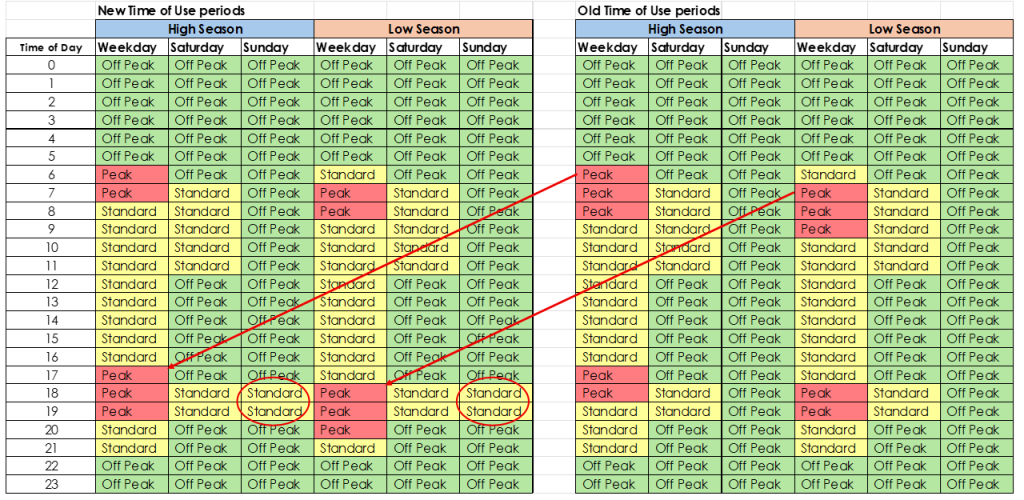
- Morning Peak periods changed from 3 hours to 2 hours and the extra hour moved to the evening.
- Two Standard hours introduced on Sundays.
2. Energy Tariff Increases
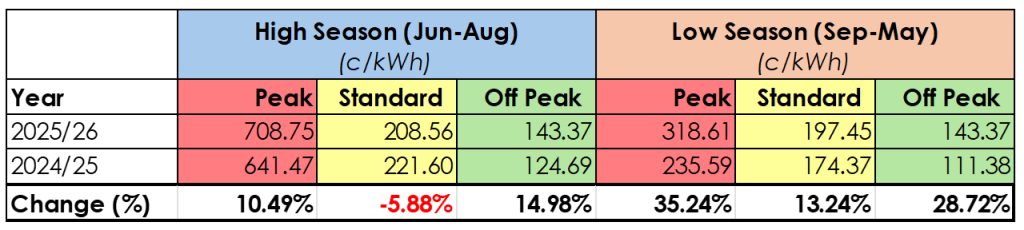
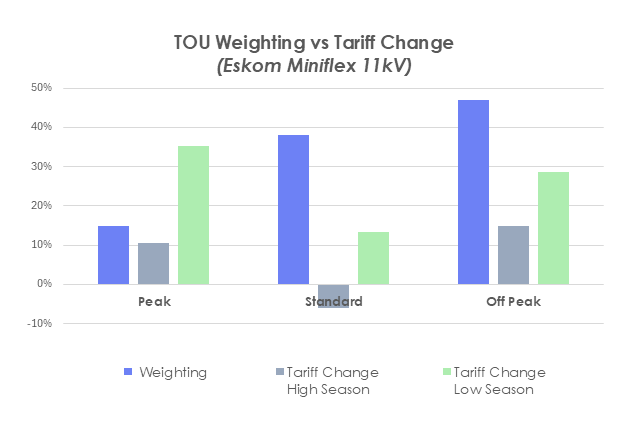
Eskom have loaded the tariff increases on the Off Peak and Peak time of use slots.
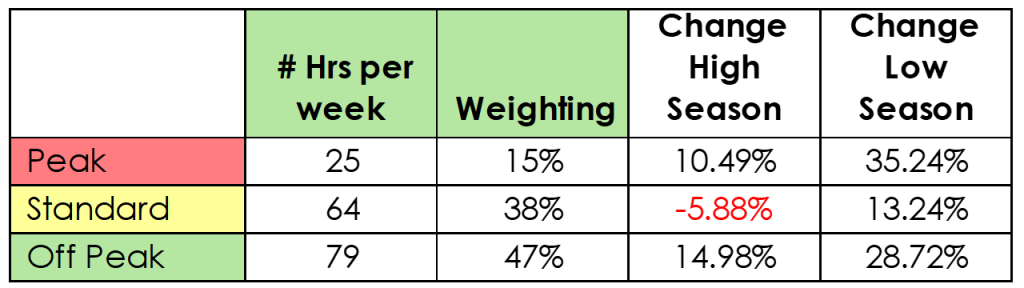
The Off Peak time of use slots represent 47% of a week, and it attracted close to the highest increase. For many manufacturers who operate 24 hours a day, Off Peak represents a major portion of their manufacturing time and electricity usage.
By loading the tariff increases for Off Peak times, and in particular during the Low Season (longest of the year at 9 months), Eskom has struck a huge blow to South Africa’s manufacturing industry.
3. New Charges
The following charges are new line items that are appearing on customers’ bills.
Legacy Charge: this is a charge of 22.78 c/kWh during all times that was introduced to compensate Eskom for the costs associated with government mandated energy projects, such as the REIPP (Renewable Energy Independent Power Producer) initiatives.
The irony is that without these projects, South Africa would have been in a worse-off position in terms of loadshedding, resulting Eskom losing more sales of electricity.
Generator Capacity Charge: this is a charge ranging from R3.34-R5.03/kVA relating to the size of the customer’s supply.
Eskom argues that their variable tariffs, such as energy charges on a c/kWh basis, were historically used to recover many of their fixed costs relating to operating their generation power plants; put simply, to pay for the cost of building power stations that generate energy. With the proliferation of solar, the revenue base from which Eskom can recover their fixed costs is shrinking. Therefore, they have ‘unbundled’ this charge from their variable charges and turned it into a fixed charge to ensure every user with an Eskom connection makes their ‘fair contribution’ to the SOE’s fixed generation costs. It’s akin to a shoe shop charging an entrance fee to recover their rental costs.
The bad news is that this charge has only been implemented at 20% of its full value this year, rising to 30% next year and up to 100% in subsequent years. i.e. the full charge will climb to R16.70-R25.15/kVA.
4. Conclusion
The changing of the tariff structure is kicking the can down the road in terms of slowing the roll-out of solar and other alternative energy technologies.
The result is more financial pressure on energy users, which will likely intensify the addition of battery storage solutions to augment solar generation.
The shift in the Peak tariff times, plus the introduction of Standard times on weekends, as well as the significant increase in the Off-Peak tariff, is going to have a huge impact on the likes of manufacturers who operate 24 hours a day. The bulk of their energy usage happens during these times, which is going to increase input costs and will contribute to much higher costs of goods to South Africans.
Municipality electricity tariffs are set to increase on 1 July and will take on a similar structure in terms of the time of use shifts and tariff increases.
Many clients are going to be very unhappy when they open their electricity bills in August.